Dry floor friction testing measures the slip resistance of flooring surfaces in dry conditions using specialised testing equipment.
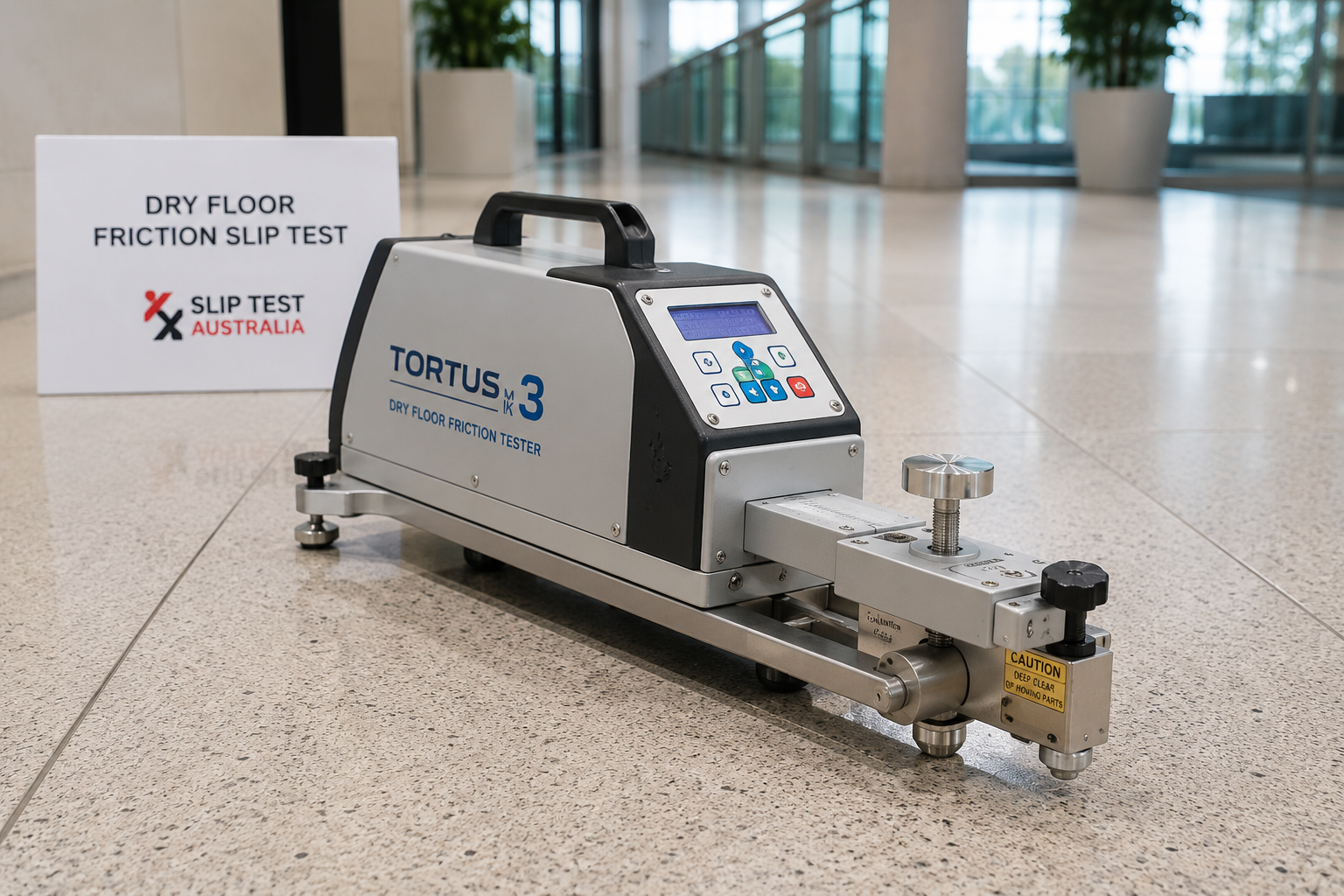
Dry floor friction testing is used to measure the slip resistance of pedestrian floor surfaces when dry. It is commonly carried out on commercial, retail, public access and workplace flooring areas.
The testing equipment measures the friction between a rubber slider and the floor surface as the device slowly travels across the tested area. The result helps indicate how suitable the surface is for safe pedestrian use in dry conditions.
Dry friction testing is commonly used for smooth internal flooring surfaces such as tiles, vinyl, timber, stone, concrete and resilient floor finishes.
The test is performed in dry conditions using a machine that moves slowly across the floor surface. As it travels, a rubber slider is dragged along the floor and the friction force is measured.
The equipment records the coefficient of friction, which helps assess the slip resistance of the tested surface. Results are then reviewed and presented in a professional report.
The floor area is inspected to ensure it is suitable for dry testing.
The testing machine travels across the surface and records friction readings.
Results are reviewed and provided with clear recommendations where required.
Dry slip resistance testing helps property owners, facility managers and businesses understand the safety performance of internal floor surfaces. It can be useful for routine safety inspections, maintenance reviews, refurbishment works and compliance documentation.
Slip Test Australia provides professional testing and reporting to support safer flooring decisions and practical slip risk management.
Dry floor friction testing is suitable for a wide range of pedestrian areas, including shopping centres, offices, schools, healthcare facilities, aged care, strata buildings, hospitality venues and public access areas.